Power banks on planes in 2026: what belongs in the pre-departure note
The 2026 ICAO power bank rules as published by the UK CAA, how airlines like Lufthansa and Emirates go further, and what agents should tell clients.
A global two-bank limit took effect in March, and several airlines go further by banning use in flight. What the UK aviation regulator says, where airlines differ, and the one line worth adding to every itinerary.
By Traviology · Published 2026-10-16
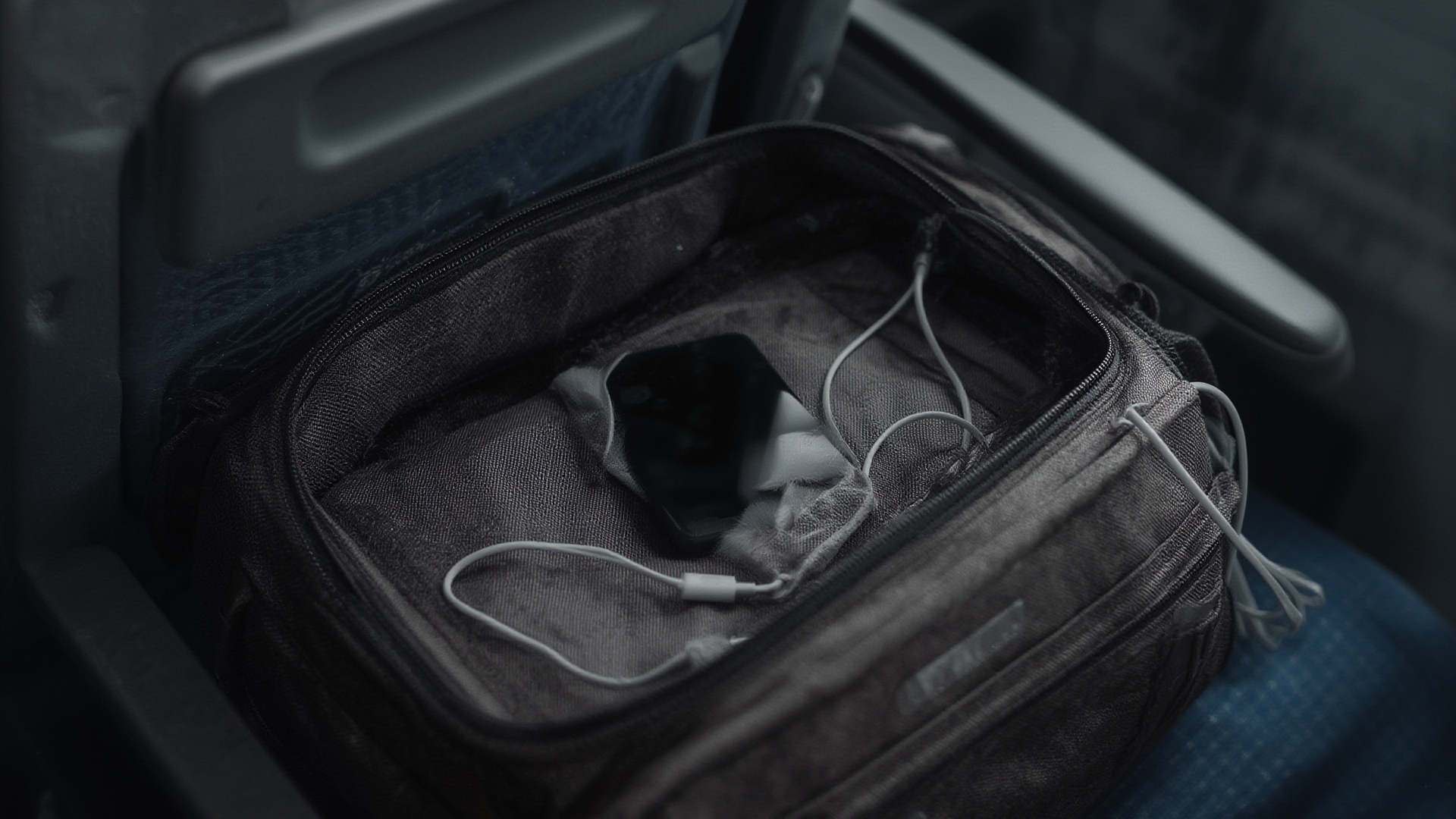
On 19 May, an easyJet flight from Hurghada to Luton diverted to Rome. According to The Independent, a passenger had told the crew about a power bank in their hold baggage that was charging a phone. The captain diverted as a precaution. Crew-hours limits then kept the aircraft on the ground overnight in Italy.
A long way to go for a battery. It's also why this belongs in your pre-departure note.
The baseline
The UK Civil Aviation Authority has published the changes that came into force on 27 March 2026, following an ICAO addendum. For passengers and crew, a power bank:
must be in carry-on baggage
must be individually protected when not in use, so the terminals can't short
must not be recharged on board
should not be used to charge other devices on board
is limited to two per person
Five rules. Easy to say, easy to forget at the security belt.
Look closely at the "should not" on use. The global rule recommends against charging a phone from a power bank in flight, whereas recharging the bank itself is prohibited outright, and individual airlines are free to be stricter than either. Plenty are.
On size, a bank up to 100 Wh needs no operator approval. Between 100 and 160 Wh the airline has to approve it for now. IATA says that allowance will not carry into the 68th edition of its Dangerous Goods Regulations, which takes effect on 1 January 2027, so from then plan on 100 Wh as the limit for a power bank.
Wh, not mAh
Banks are sold in milliamp-hours, but the limit is in watt-hours. The sum is capacity in amp-hours times voltage, so a 20,000 mAh bank is 20 Ah and, at a typical 3.7 V, about 74 Wh. A 30,000 mAh bank comes out around 111 Wh. That one needs airline approval today, and from 1 January 2027 clients should expect it to be refused. The number printed on the casing is what counts, so tell clients to read the label before they leave home. Easy.
Where airlines go further
Lufthansa Group, in rules announced in January 2026, allows two power banks per passenger but no use and no charging on board. They can't go in the overhead bin. They stay on the passenger, in the seat pocket, or in a bag under the seat in front. Essential medical devices are an exception. The rule covers Lufthansa, SWISS, Austrian, Brussels Airlines, ITA Airways, Eurowings, Air Dolomiti and Edelweiss.
The Independent's May round-up says Emirates bans use and allows one power bank per passenger, kept in the seat pocket or under-seat bag. It also says Virgin Australia, Qantas and Jetstar no longer allow use on board. We've relied on that article for the non-European carriers and haven't opened their own pages, so check before you quote them.
What to put in the note
Keep it short. Something like this:
Power banks go in your cabin bag, never in checked luggage. Take no more than two, check the Wh on the label, and expect that your airline may not let you use them in flight. Keep them under the seat in front, not in the overhead locker.
On trips with several carriers, tell the client to follow the strictest one. That's our rule of thumb, not a regulation.
Limits of this piece
This is the UK regulator's summary of an international rule, not every country's version. Airline rules have changed several times in the past year and will probably move again. We haven't verified current wording for each airline. We also haven't covered other lithium items, such as spare camera batteries or vapes, so look at the operating airline's own page when you issue tickets.
Sources
Lufthansa Group introduces new power bank rules (Onboard Hospitality, 15 January 2026)
Can I take my portable charger on a flight? (The Independent, 25 May 2026)
Checked October 2026. Airline rules change often.
See it on your brand
Flights, hotels, trains, transfers, and tours, sold under your name. One short walkthrough, then you decide.