Wallets, invoices and the quiet back office
How multi-currency organisation wallets, invoicing and finance adjustments on Traviology's Platform and Enterprise plans fit an agency's month-end, honestly.
Multi-currency wallets, invoicing and finance adjustments come with the Platform and Enterprise plans. Where they fit in an agency's month-end, and where we'd rather you ask.
By Traviology · Published 2026-10-10 · Updated 2026-10-11
Nobody picks a booking platform for its month-end. Agents choose on what clients see: search, price, the itinerary. The money side gets noticed when it goes wrong, usually on the last working day of the month, with a client waiting for an invoice. Yet month-end is where a platform saves a finance person an afternoon or costs them one. Nobody's favourite job, month-end. This piece sets out what the Platform and Enterprise plans include on the money side and, because we'd rather be useful than impressive, where our answer is "ask us".
What's included
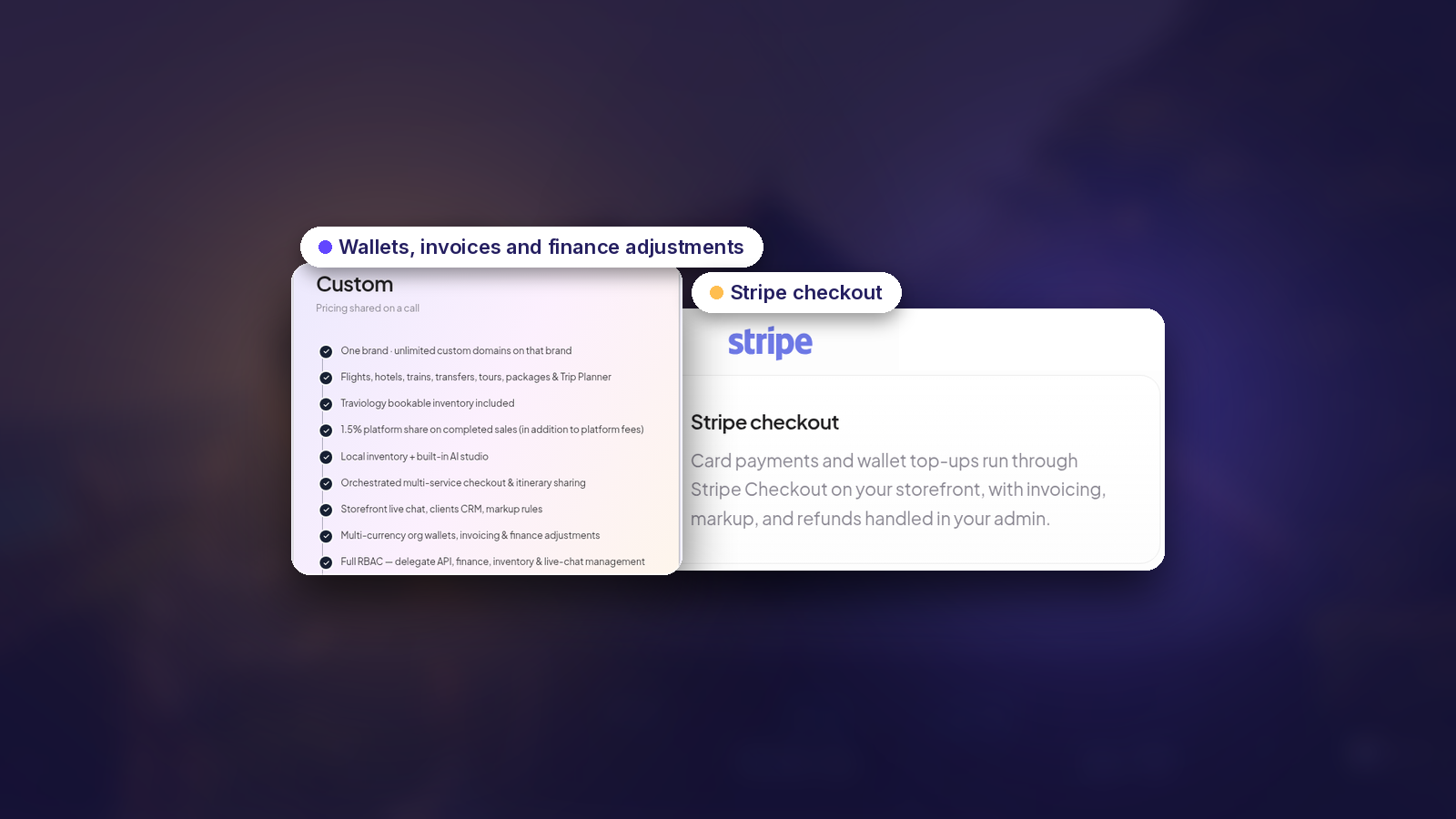
The Platform and Enterprise plans include:
Multi-currency organisation wallets.
Invoicing.
Finance adjustments.
Card payments and wallet top-ups use Stripe Checkout.
Day to day, the agency lives in the operator console: bookings, clients, markup, content and support.
On cost, the Platform plan carries a 1.5% platform share on completed sales, on top of platform fees. Enterprise is negotiable. Run the arithmetic on your own volume first: 1.5% of 10,000 is 150, and you'd rather know that number now than find it later.
Where it fits in a month
Here is the shape of a typical month-end for an agency that sells online, and which of our tools it touches. Treat each item as a question to answer, not a promise about screens.
Card money comes in through Stripe Checkout, so know which payments you expect and in what currency. Wallet top-ups go the same way, which raises a question: who tops up, how often, and in which currency? The wallets are multi-currency, so decide which balances you'd hold and why; your finance person should have a view. Corporate and repeat clients often want an invoice, not just a receipt, so decide who issues them and when. Refunds, goodwill credits and corrections will happen, and the plans include finance adjustments, so work out beforehand who records them and what the client is told. On the Platform plan the 1.5% is a cost line, so put it in your margin maths before you set markup. And check markup, which lives in the operator console, before the month closes and not after.
What we'd put in a checklist
A short list of who can top up the wallet and who can issue adjustments.
A habit of reviewing adjustments weekly, not monthly.
A note of the currencies you hold and why.
A copy of the invoice process in plain words, so a stand-in can follow it.
What we haven't said, and why
We've kept this to what's included, because we'd rather be clear about the limits than imply more.
We haven't described how invoices look, how tax is shown, how exports to accounting software work, or how reconciliation against your bank statement is done, and we haven't said how wallet balances are shown across currencies or what a finance adjustment looks like on screen. Those are the first questions an accountant will ask. The right answer is a conversation, not a paragraph from us.
If you're comparing platforms, ask each one for the same three things: a sample invoice, an explanation of how a refund shows in the books, and what the month-end export looks like. Ask us the same.
You can find the rest of how we work with agencies on the for agencies page.
Sources
This piece is based on Traviology's own plan facts, so it has no external sources. Plan details checked October 2026.